
When selecting optical materials for infrared (IR) systems, Zinc Selenide (ZnSe) and Germanium (Ge) are two commonly considered options. Both offer excellent infrared transmission, but their optical and thermal properties make them suitable for different applications.
1. Infrared Transmission Range
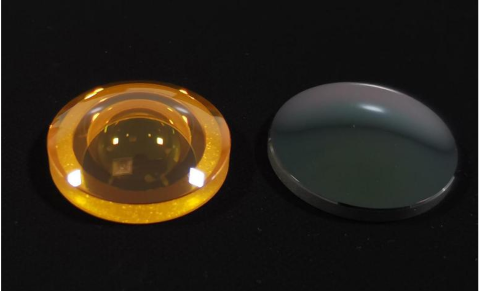
ZnSe typically transmits from approximately 0.5 to 20 μm, making it suitable for a wide range of IR applications, particularly CO₂ laser systems operating at 10.6 μm. Ge has a transmission range of approximately 2 to 14 μm. It is widely used in thermal imaging systems, infrared cameras, and thermal sensing equipment, especially in the MWIR and LWIR bands.
2. Optical and Thermal Properties
ZnSe has a relatively low refractive index of approximately 2.4 at 10.6 μm, offering good transmission for CO₂ laser optics. Its relatively low absorption also makes it a popular choice for high-power laser windows and focusing lenses. Ge has a much higher refractive index, around 4.0 in the infrared region. This makes it useful for compact optical designs, although antireflection coatings are generally necessary to reduce surface reflection. It also offers higher thermal conductivity and hardness than ZnSe.

3. How to Choose Between ZnSe and Germanium?
The choice depends on wavelength, operating power, thermal conditions, and optical design requirements. For CO₂ laser cutting, engraving, and welding systems, ZnSe is often preferred for focusing lenses and protective windows. For thermal imaging, infrared cameras, and temperature measurement equipment, Germanium is a common choice for lenses and windows.
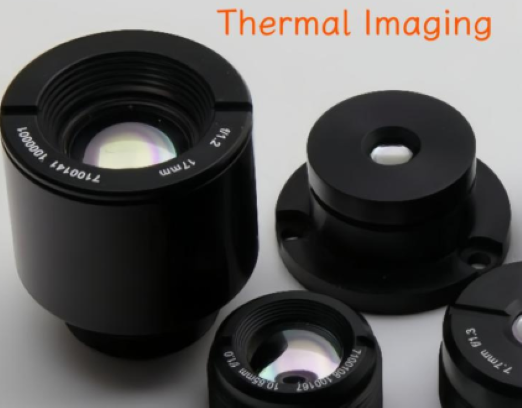
At Betensh Optics, we manufacture custom ZnSe and Germanium optical components according to customer drawings and application requirements. Material selection, dimensions, surface quality, and coating specifications can all be evaluated based on your optical design.


Our hours
Mon 11/21 - Wed 11/23: 9 AM - 8 PM
Thu 11/24: closed - Happy Thanksgiving!
Fri 11/25: 8 AM - 10 PM
Sat 11/26 - Sun 11/27: 10 AM - 9 PM
(all hours are Eastern Time)
 English
 français
 Deutsch
 italiano
 русский
 español
 português
 Türkçe
 ไทย
 Tiếng việt

 IPv6 network supported